How Much Possibly Unhealthy Magnetic Radiation (EMR/EMF) Does My Car Have?
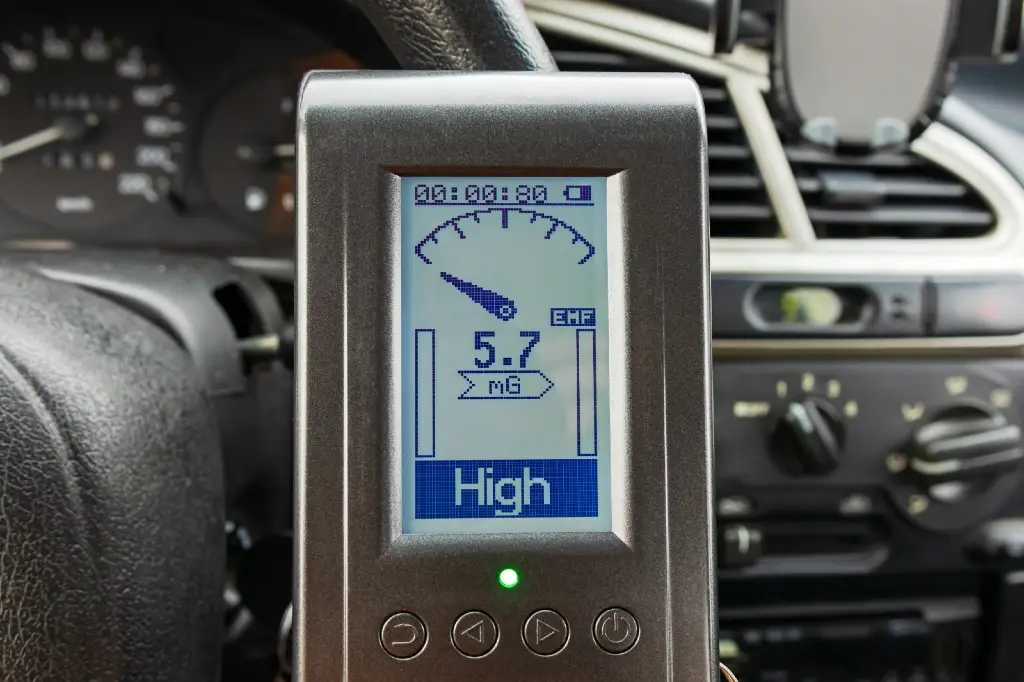
You have probably heard that vehicles emit electromagnetic fields (EMF), a form of non-ionizing radiation. The primary type of EMF exposure inside passenger vehicles consists of extremely low-frequency (ELF) magnetic fields, which are generated by high-current electrical systems such as motors, batteries, inverters, and power cables.
The World Health Organization (WHO), through the International Agency for Research on Cancer (IARC), has classified extremely low-frequency magnetic fields as “possibly carcinogenic to humans” (Group 2B) based on evidence gathered over years of research (https://www.who.int/teams/environment-climate-change-and-health/radiation-and-health/non-ionizing/exposure).
So, how much magnetic field exposure does your car have? Or the vehicle you are considering purchasing?
Magnetic field exposure depends on the vehicle model, seat position, driving conditions, electrical system design, and the measurement method used. Unfortunately, publicly available information is still limited. While consumers have access to detailed crash safety ratings, fuel economy data, and emissions information, reliable vehicle EMF measurements remain available for only a relatively small number of models.
This article summarizes what is currently known about vehicle EMF, explains why exposure varies so much between vehicles, and highlights the best publicly available sources of measurement data.
Why Do EMF Levels Vary So Much Between Vehicles?
Contrary to common belief, magnetic field exposure can vary dramatically—not only between different manufacturers, but also between different models from the same manufacturer.
The most important factor is usually how the vehicle’s electrical system is designed and integrated, rather than simply whether the vehicle is electric, hybrid, or conventionally powered.
The routing of high-current cables, the location of electric motors, batteries, inverters, grounding systems, shielding, and other electrical components all influence passenger exposure.
Passenger distance from these components can often be just as important—or even more important—than the voltage or current itself. For example, a relatively small electrical component located directly beneath a seat may produce higher passenger exposure than a much larger component located farther away.
Measurements have also shown that EMF levels can vary considerably within the same vehicle. One seating position may have very low magnetic field levels, while another may contain localized “hot spots” where exposure is several times higher. In some areas of the cabin, almost no measurable magnetic field may be present.
Vehicle magnetic field measurements are typically reported in microtesla (µT) or milligauss (mG), depending on the organization conducting the measurements.
How Can You Find the EMF Level of Your Car?
Unfortunately, there is still no universal database that provides EMF ratings for every vehicle.
Vehicle EMF evaluation is a relatively new field. Unlike crash safety or fuel efficiency, magnetic field exposure is not yet included in most standard automotive rating systems.
Currently, only a limited number of countries have established formal programs for measuring or grading magnetic field exposure in passenger vehicles, most notably China and Israel.
Interest in vehicle EMF evaluation continues to grow worldwide, and it is reasonable to expect additional research and reporting initiatives in the coming years. However, the timing and scope of future regulatory programs will depend on decisions made by individual governments and automotive organizations.
Where Can You Find Reliable Vehicle EMF Information?
Until internationally standardized vehicle EMF ratings become widely available, consumers can estimate the magnetic field exposure of specific vehicles by reviewing publicly available measurement programs and scientific studies.
1. China C-NCAP / CAERI EMF Assessment Program
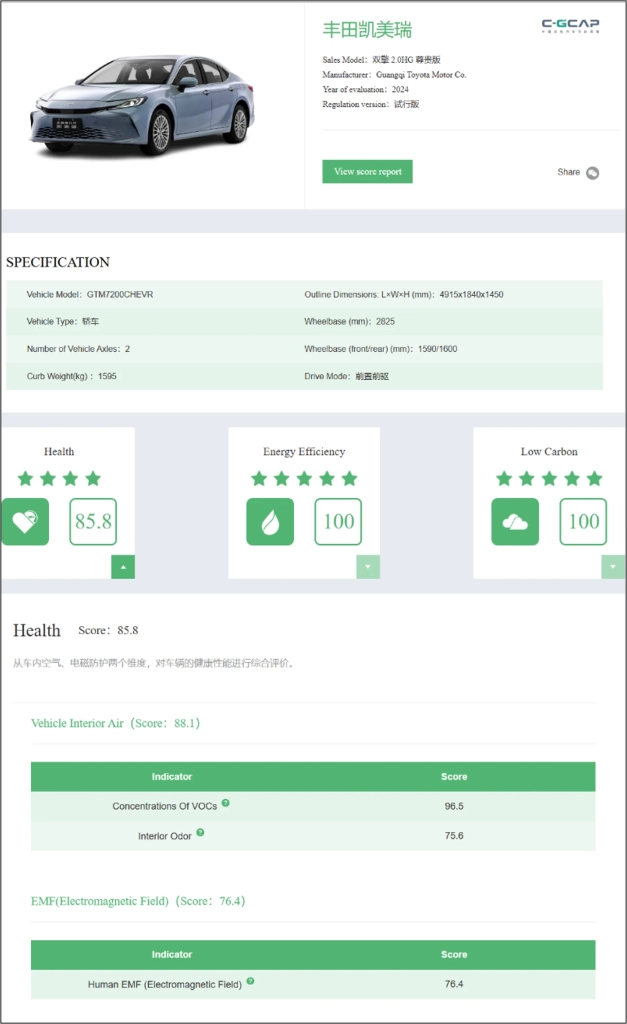
China has become one of the first countries to include magnetic field measurements as part of a national vehicle assessment program where consumers can compare magnetic field measurements across tested vehicle models using standardized testing procedures.
The assessment of in-cabin electromagnetic fields (EMF) is driven by two state-backed automotive research organizations. The China Automotive Technology and Research Center (CATARC) administers the China Green Car Assessment Program (C-GCAP)—a specialized environmental and health counterpart to C-NCAP—which evaluates low-frequency magnetic fields against both general public safety limits and rigorous medical implant immunity standards. Operating in parallel is the China Automotive Engineering Research Institute (CAERI), which manages the China Automobile Health Index (C-AHI), a competing framework featuring its own dedicated electromagnetic radiation (EMR) protocols.
CATARC (C-NCAP / C-GCAP): Official C-NCAP Portal
CAERI (C-AHI): Official C-AHI Results Portal
2. Israeli Ministry of Environmental Protection
Israel (through public and private institutions and companies) has conducted extensive measurements of vehicles sold in the local market and publishes the results for consumers. These measurements provide publicly accessible information for many popular vehicle models though the website of the Israel Ministry of Environmental Protection.
3. European Commission Research Projects
The European Commission has funded several scientific projects investigating passenger exposure to electromagnetic fields in electric and hybrid vehicles. These studies provide valuable research data and improve our understanding of real-world exposure conditions.
4. German Federal Office for Radiation Protection (BfS) and Seibersdorf Laboratories
Researchers from BfS and Seibersdorf Laboratories have conducted field studies examining magnetic field exposure in a wide variety of vehicles under realistic driving conditions. Their work helps characterize how passenger exposure changes during everyday vehicle operation.
https://www.bfs.de/EN/bfs/science-research/emf/completed/exposure-electromobility.html
5. BIT GmbH and Technical University of Berlin
Technical studies from BIT GmbH and the Technical University of Berlin have contributed important measurement methodologies, testing procedures, and comparative vehicle data that support ongoing research into vehicle EMF exposure.
The Bottom Line
When it comes to vehicle magnetic field exposure, assumptions can be misleading.
An electric vehicle is not necessarily associated with higher passenger exposure than a hybrid or even a conventional gasoline vehicle with high sources of electrical currents such as electrical heating system for example. Likewise, two vehicles from the same manufacturer may exhibit very different magnetic field levels.
The only reliable way to understand magnetic field exposure inside a vehicle is through proper measurement using standardized methods.
As more governments, research organizations, and vehicle testing programs publish EMF data, consumers will gain access to increasingly transparent information that will help them make more informed purchasing decisions.
In the meantime, consumers should rely on publicly available measurement programs whenever possible or consult a qualified electromagnetic field measurement laboratory if they require a professional assessment of a specific vehicle.